
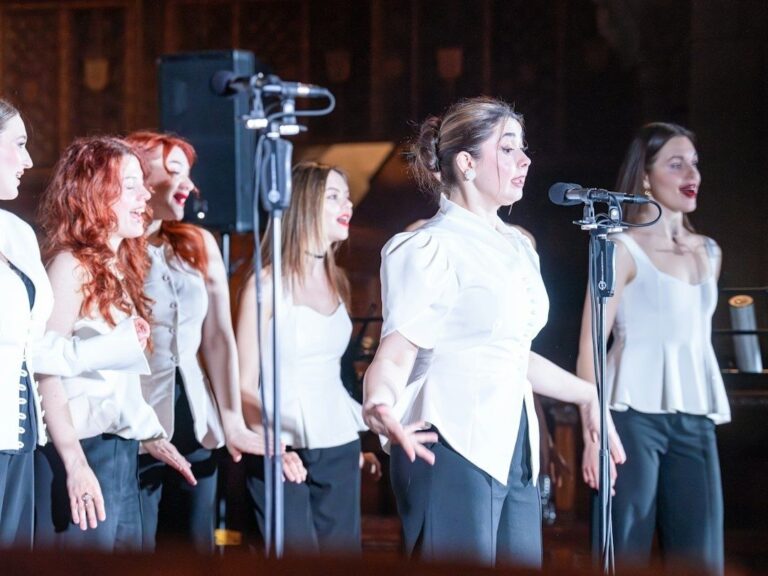
Harmonizing Heart and Sound Behind the Mixing Console
Four-part gospel harmony carries a rare kind of emotional authority. When bass, baritone, lead, and tenor lock together, the result can feel larger than the stage itself: a grounded foundation, a warm inner movement, a clear narrative voice, and a bright upper line that seems to lift the message toward the rafters. That sound is not merely technically impressive. It can bring a congregation into shared attention, strengthen the words of a hymn, and turn a concert into an uplifting experience that lingers long after the final cadence.
Reproducing that experience in a sanctuary is a demanding art. Four singers bring different vocal timbres, microphone techniques, volumes, and physical positions, while the room adds reflections from hard surfaces, high ceilings, and reverberant balconies. A mix that works in headphones may become cloudy through a church sound system. The answer is not to process every singer into the same polished shape, but to hear the quartet as one interconnected acoustic instrument. Strategic microphone choices, complementary equalization, restrained dynamics control, and attentive communication with the singers can preserve individual character while allowing the harmony to speak as one rich voice.
Understanding the Four Pillars of the Gospel Vocal Architecture
A gospel quartet works because each part has a distinct acoustic duty. The bass establishes weight and certainty, often living in the lower register with a rounded chest resonance. The baritone occupies the crucial middle ground, connecting the foundation to the upper voices and supplying much of the chord’s warmth. The lead carries the narrative, so intelligibility, emotional nuance, and forward presence are essential. Above them, the tenor adds lift, brightness, and often the most piercing expression of the arrangement.
Deeply embedded in the storied tradition of Southern gospel, the classical four-part configuration relies on each singer carving out an exact acoustic pocket, a principle reflected in the history of Southern gospel harmony. Traditional arrangements balance chest resonance with bright harmonic overtones rather than treating every voice as a separate soloist. The bass must remain firm without swallowing the rhythm section, the baritone must remain audible without masking the lead, and the tenor must rise above the blend without sounding detached or strident.
| Voice | Primary role | Common acoustic focus |
|---|---|---|
| Bass | Chord foundation and rhythmic weight | Low fundamentals, controlled low mids, clear consonants |
| Baritone | Inner harmony and connective warmth | Low-mid definition and careful separation from lead |
| Lead | Lyric, emotional, and melodic focus | Presence, intelligibility, and controlled sibilance |
| Tenor | Upper harmonic lift and emotional brilliance | Upper-mid clarity, air, and restraint around harshness |
These frequency descriptions are starting points, not rigid prescriptions. A naturally dark tenor may need more presence than a bright baritone, while a powerful bass may need more low-frequency control than a lighter singer. Listen for the role each voice plays inside the chord. The objective is not to make every channel impressive in isolation, but to make the complete arrangement understandable at the same time.
Microphone Selection and Polar Patterns for Taming Sanctuary Bleed
Microphone choice begins with the physical arrangement of the quartet. Cardioid microphones offer useful rejection behind the capsule and are often forgiving when singers move slightly during an animated performance. Supercardioid patterns can provide tighter control of sound arriving from the sides, which is valuable when vocalists stand close together, but their rear rejection zone is narrower. The wedge must therefore be positioned with greater precision. A microphone pattern only helps when the loudspeaker sits in the pattern’s least-sensitive direction.
Close miking can increase gain before feedback and reduce the amount of sanctuary ambience entering each channel, but it also makes proximity effect more noticeable. A singer who moves very close to a directional microphone may produce a pleasing sense of depth, or may create an excess of low-mid energy that clouds the baritone and bass. The practical guidance in Shure’s vocal miking techniques emphasizes how polar pattern, distance, handling, and proximity effect interact in live use.
Applying established sound reinforcement microphone techniques, alongside guidance from an Authoritative Source, allows audio teams to maximize gain before feedback while keeping natural vocal dynamics intact. Encourage consistent microphone distance rather than forcing singers to remain motionless. Quiet phrases may benefit from closer placement, while a full-voice belt usually requires a small retreat. Microphones should be held by the handle, not cupped around the grille, because covering the capsule can alter the pattern and invite feedback. Shock isolation and sensible cable management also reduce handling noise that would otherwise compete with delicate harmony.
- Begin with the microphone manufacturer”s stated pattern and test it at the actual stage position.
- Place wedges in the appropriate null area, then confirm the result at performance volume.
- Match microphone height and angle so singers are not unconsciously turning across the capsule.
- Use proximity effect musically, but remove unnecessary low-mid buildup at the channel or group level.
Carving the Acoustic Spectrum with Purposeful EQ and Compression
Equalization should clarify relationships rather than impose identical settings on four different voices. A gentle high-pass filter on each vocal channel can remove stage rumble, footfall energy, and unnecessary microphone handling noise. The cutoff should be chosen by ear and by voice. A bass may need more of its low register preserved than a tenor, while a baritone often benefits from careful attention to the low-mid region where warmth can turn into congestion.
The lead and baritone frequently compete because both occupy the center of the vocal spectrum. Instead of boosting the lead aggressively, try a modest, broad reduction in the baritone’s congested area and a restrained presence lift on the lead. The tenor may need control in the upper mids when a strong belt becomes sharp through the sanctuary system. A narrow cut can remove the offending edge, but excessive reduction will rob the voice of urgency and lyric detail. Sibilance should also be handled lightly, since overactive de-essing can make consonants disappear in a message-driven performance.
- Listen to the unprocessed quartet first, identifying which voice is masking another before touching EQ.
- Apply high-pass filtering and small complementary cuts before reaching for dramatic boosts.
- Check the blend from several locations in the sanctuary, not only at the console position.
- Use compression to stabilize movement, then bypass it briefly to confirm that the arrangement still breathes.
Compression is most effective when it supports communication. Moderate channel compression can prevent sudden peaks from overwhelming the room while keeping quieter phrases present. A shared vocal bus with gentle compression can then provide cohesion, allowing the quartet to feel like a single ensemble rather than four unrelated channels. Attack and release times should preserve consonants and natural phrasing. Heavy compression can raise room spill and feedback risk, so the compressor should never become a substitute for microphone discipline or a carefully tuned monitor system.

Creating Supportive Monitor Mixes That Inspire Confident Pitch
Singers make better musical decisions when the monitor mix gives them a trustworthy reference. If a wedge is crowded with drums, guitars, keyboards, and several competing vocals, the quartet may begin to push for volume. That extra effort can make pitch rise, flatten, or lose its centered tone. A room with excessive reverberation compounds the problem by returning blurred syllables and delayed harmonic information to the stage. Acoustic treatment and system design matter here, since excessive reverberation is associated with reduced speech intelligibility and can make music indistinct when the room continues ringing after each phrase.
Each vocalist should hear enough of the direct harmony reference to understand the chord, but not so much that the monitor becomes a second front-of-house mix. The lead may need a clear amount of the bass and baritone to judge the harmonic foundation. The tenor may need the lead and baritone more prominently than the full band. The bass often benefits from hearing the lead’s phrasing and a controlled amount of rhythm, which helps maintain pocket without encouraging excessive low-frequency level.
- Start with the singer’s own voice at a comfortable level, then add the most important neighboring harmony.
- Keep unnecessary instruments out of vocal wedges, especially during close-harmony passages.
- Align each wedge with the microphone’s rejection zone and avoid aiming it directly at the rear of a supercardioid microphone.
- Walk the stage during soundcheck to locate hot spots, reflections, and changes in vocal intelligibility.
Feedback prevention is not only a matter of pulling frequencies out of an equalizer. It depends on placement, gain structure, microphone technique, loudspeaker direction, and room behavior. Sanctuary acoustics may require broader solutions such as absorption, diffusion, ceiling treatment, or improved isolation. During soundcheck, ask singers to perform the quietest verse and loudest chorus, then tune the monitors for both extremes. The goal is a stable platform that inspires confident pitch, expressive dynamics, and the freedom to deliver the message without fighting the sound system.
Elevating the Message Through Acoustic Excellence
The mixing console becomes an instrument of ministry when its decisions help the audience hear both the words and the heart behind them. A technically impressive quartet mix is not defined by maximum loudness or conspicuous processing. It is defined by a bass that supports without booming, a baritone that enriches without disappearing, a lead that communicates every line, and a tenor that brings light without piercing the congregation’s ears.
That balance develops through active listening and collaboration. Invite the vocalists into soundcheck, ask what they need to sing securely, and listen from the room rather than trusting the console position alone. Make small changes, check the full harmony, and protect the natural movement of the arrangement. When technical clarity serves close harmony instead of competing with it, every note can carry farther, every lyric can land more clearly, and the timeless message of gospel music can meet the audience with lasting encouragement.