
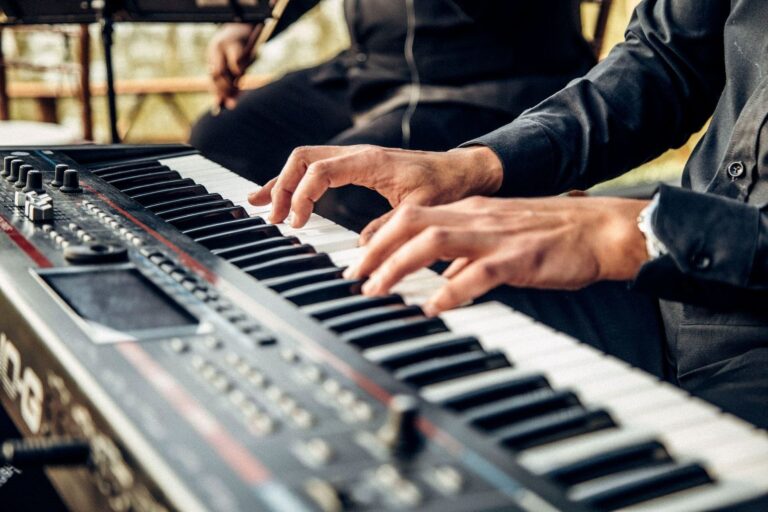
The Unsung Heartbeat Beneath Four-Part Harmony
Before the first tenor rises into a clear, ringing entrance, the piano may already have shaped the room. A low octave lands with authority, the left hand points toward the next chord, and a bright right-hand response settles into the pocket of the song. In that brief opening, listeners hear more than harmony. They hear direction, confidence, and the promise of an uplifting performance. Rooted in the rich traditions of gospel music, the piano serves as both melodic foundation and timekeeper.
That responsibility becomes especially clear when a quartet performs without a drummer. The singers provide close harmony, language, and emotional testimony, but the pianist supplies the constant movement beneath them. A dependable left hand can function like a kick drum and bass player combined, while the right hand creates the rhythmic punctuation that encourages a chorus to rise. The accompanist is therefore not passive background color. The pianist is the ensemble”s rhythmic motor, dynamic guide, and often its most immediate source of momentum.
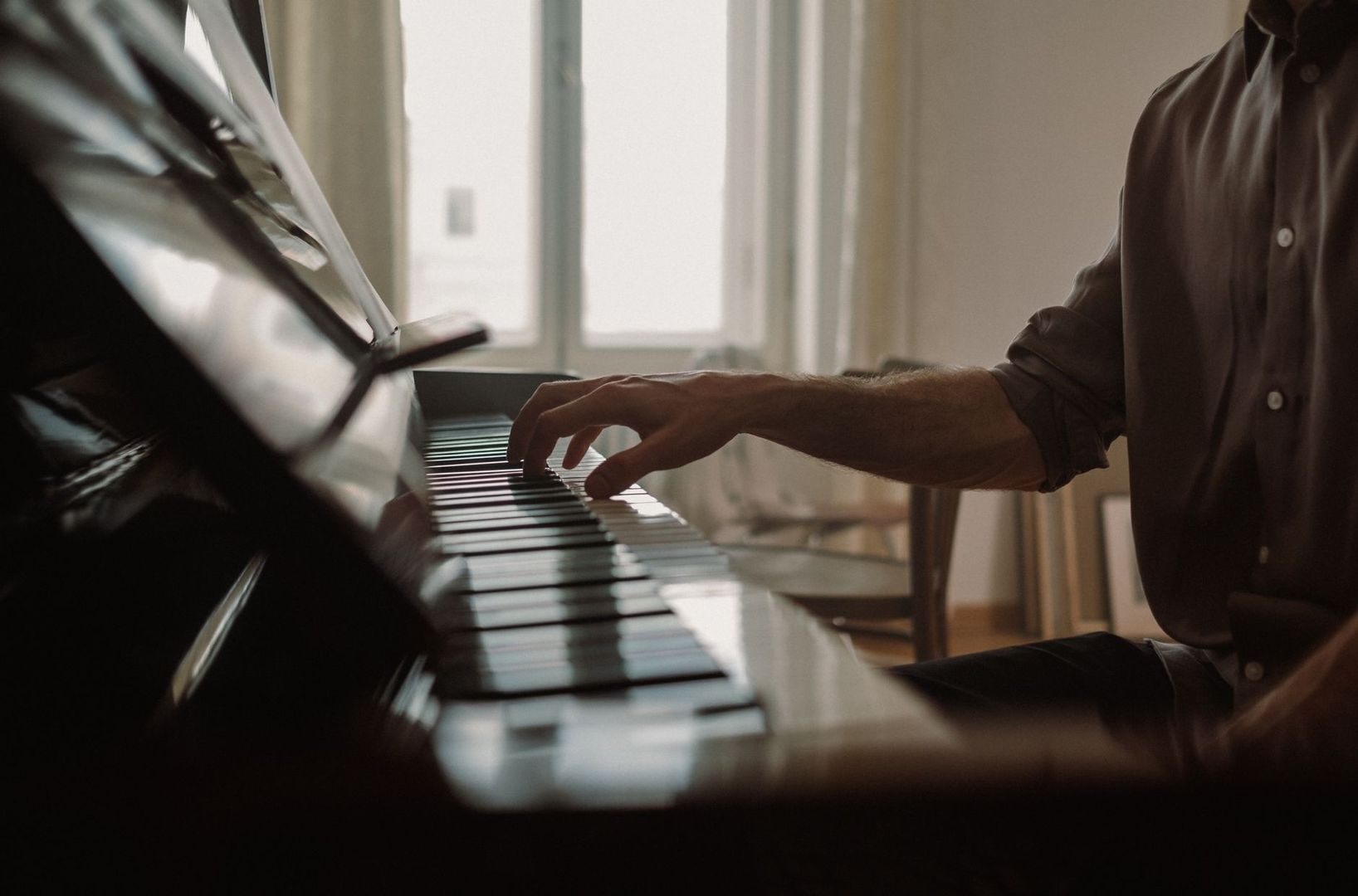
The Left Hand Engine and the Anatomy of the Walking Bass
The classic Southern gospel foundation is often described as “boom-chuck.” Its strength comes from clarity rather than complexity. On the first beat, the left hand emphasizes the chord root, often in a low register or octave. The next pulse answers with the fifth, or with another carefully chosen bass tone that confirms the harmony. Meanwhile, the right hand places a chord or inversion on beats two and four. The result is a grounded, alternating pattern that gives singers a reliable framework for entrances, sustained phrases, and rhythmic consonants.
Octave leaps must be powerful without becoming careless. If the root is too low, the tone can become muddy; if the fifth is struck too aggressively, it may compete with the vocal bass. A disciplined pianist listens for the quartet”s lowest voice and leaves enough acoustic space for that singer to define the bottom of the chord. The goal is not simply to play low notes. It is to make every bass movement legible, so the group can feel where the measure begins and where it is headed.
Walking bass lines add forward motion when the song needs more than a stationary pattern. A stepwise walkup can connect the root of one chord to the next, while a walkdown can prepare a turnaround or intensify the final phrase of a verse. These movements can imitate the propulsion of an acoustic kick drum and bass line, particularly in a piano-only concert. Pianists playing Southern gospel arrangements frequently rely on tight walking bass lines to sustain drive.
Start with patterns that remain dependable under pressure:
- Root and fifth: Alternate the chord root and fifth to establish an unmistakable pulse.
- Octave reinforcement: Use octaves at important structural points, especially at the beginning of a chorus or a climactic tag.
- Stepwise connection: Add a measured walkup or walkdown between neighboring chords rather than filling every available beat.
- Dominant preparation: Use the bass to make a dominant chord feel inevitable before the return to the tonic.
The basic pattern should be mastered before embellishment becomes a priority. In this style, a simple line played with conviction often serves the vocal message better than a busy line full of unexpected turns. The pianist must also consider chord color. Major sevenths, though beautiful in some settings, can place two vocal parts a half step apart and create unnecessary friction in a traditional quartet arrangement. Added seconds and sixths on tonic and subdominant triads can offer warmth, while seventh tones are generally most useful on dominant chords and secondary dominants.
Syncopation and Right-Hand Vamps That Lift the Spirit
The right hand gives the boom-chuck pattern its conversational character. Crisp chord stabs on beats two and four can lift the energy without occupying the vocal lanes. When the lead singer holds a long syllable, the pianist may answer with a short, controlled voicing. When the tenor completes a phrase, a compact chord response can reinforce the cadence. These gestures should feel like encouragement, not interruption. The best vamp seems to make the singers breathe more confidently.
Syncopation works because it creates contrast against the steady left hand. A chord struck just before a strong beat can pull the quartet forward; a delayed response can make a chorus feel broader and more spacious. The key is restraint. If every subdivision receives a chord, the arrangement loses its sense of hierarchy, and the words become harder to understand. The pianist should identify the spaces around the vocal line and place rhythmic material where it strengthens the message.
Register also determines whether a vamp supports or crowds the ensemble. The tenor commonly occupies the highest vocal territory, so a pianist should avoid placing thick, bright voicings directly on top of that line. The lead needs room for diction and expressive phrasing. The baritone often benefits from middle-register support, while the bass requires a clear and uncluttered foundation below. A well-shaped keyboard texture mirrors those functions rather than treating the quartet as one undifferentiated block.
| Keyboard area | Primary rhythmic responsibility | Practical concern |
|---|---|---|
| Low left hand | Root motion, pulse, and forward drive | Keep the bass clear enough for the vocal bass to remain audible |
| Middle right hand | Chord stabs, responses, and harmonic definition | Use compact voicings that do not mask lead diction |
| Upper right hand | Lift, color, and selective emphasis | Reserve brighter tones for transitions, tags, and climactic phrases |
A vamp is more than a repeated chord pattern. It is a flexible bridge that covers an extended introduction, a delayed entrance, a spoken moment, or a spontaneous repeat. The pianist must know where the form is at all times, even while extending it. Chord progressions are especially valuable here because they allow the accompanist to navigate a song when the singers stretch a phrase or return unexpectedly to a refrain. The safest vamp is one that can be shortened, redirected, or resolved without audible confusion.
Volume is part of this conversation. The piano must be loud enough to give singers courage and keep the communal sound energized, but it should not become the featured performance. A quartet may depend on the keyboard to prevent the tempo from dragging, yet the timeless message remains in the voices. Dynamic shaping therefore matters more than constant force. Begin with enough presence to establish the pocket, grow beneath the chorus, and release beneath intimate lines so the words retain their full emotional weight.
Leading from the Bench Without Stealing the Spotlight
Accompaniment has a musical chain of command, but that chain is not rigid. The pianist responds to the conductor when one is present, watches the lead singer”s phrasing, and remains alert to the quartet”s shared form. At the same time, the instrument often has to provide leadership. A hesitant accompaniment can cause singers to drag, lose pitch, or enter without confidence. Strong accompaniment supplies a stable center while leaving room for the vocalists to communicate.
That balance requires anticipation. A pianist learns to recognize a singer”s breath mark, the physical preparation before a key change, and the slight pause that signals a spontaneous cadenza. The hands may need to hold a chord longer, create a gentle turnaround, or vamp for another measure while the singer completes a thought. These choices are rarely written in full on a chart. They come from listening closely to diction, posture, consonants, and the emotional direction of the performance.
- Map the form: Know every verse, chorus, turnaround, tag, modulation, and ending before the performance begins.
- Listen beyond the keyboard: Track the lead, tenor, baritone, and bass as separate musical voices rather than hearing only the combined chord.
- Leave room: Reduce density under important words, sustained high notes, and exposed bass entrances.
- Prepare the recovery: If a mistake occurs, return to the pulse and the next clear harmonic landmark instead of drawing attention to the error.
- Serve the message: Let rhythmic confidence and harmonic color support spiritual communication rather than replacing it.
Recovery is one of the quiet marks of professionalism. Every live musician can miss a note, misread a cue, or encounter an unexpected repeat. The audience may never notice if the pianist maintains the pulse and rejoins the progression calmly. Composure protects the singers, especially during a concert moment when a quartet is building toward a powerful final chorus.
Spiritual resonance is not created by maximum volume or maximum complexity. It grows from sensitivity, preparation, and a willingness to make the right musical decision at the right moment. A restrained vamp beneath a tender verse may communicate more than a cascade of fills. A firm bass entrance before the final chorus can make the entire room feel gathered into one pulse. The pianist leads most effectively when the audience feels the unity of the performance rather than the effort required to produce it.
Keep the Faith and the Rhythm Moving Forward
The gospel pianist is an indispensable partner in vocal ministry and live quartet performance. Through the left hand, the pianist establishes the road beneath the singers. Through the right hand, the pianist shapes conversation, anticipation, and release. Through attentive listening, the pianist protects the blend between tenor, lead, baritone, and bass, allowing every part to contribute to a rich vocal sound.
Mastery begins with fundamentals that may appear modest: a steady root and fifth, a controlled boom-chuck, clean inversions, thoughtful dynamics, and an accurate sense of form. Those fundamentals become powerful when practiced until they remain dependable under the pressure of a live concert. When disciplined rhythm meets heartfelt musicality, every chorus can rise with greater clarity, confidence, and lasting encouragement. The piano does not merely accompany the harmony. It keeps the harmony moving, gives the message room to breathe, and helps the entire congregation feel the song together.